Public vs Private Blockchain: Key Differences Explained
Blockchain technology has emerged as a revolutionary force capable of disrupting numerous industries by providing a decentralized, secure, and transparent way to record transactions. However, not all blockchains are created equal. There are two primary types of blockchain networks: public and private. Understanding the differences between these two types is essential for businesses and developers seeking to leverage blockchain technology effectively. This article explores the key differences between public and private blockchains, outlining their unique characteristics, advantages, and challenges.
Understanding Blockchain Basics
Before delving into the differences between public and private blockchains, it’s important to grasp the fundamental concept of blockchain technology. A blockchain is a distributed ledger that records transactions across multiple computers in a way that ensures the security and integrity of the data. Each record, or “block,” is linked to the previous one, forming a chain. This technology’s decentralized nature means that no single entity has control over the entire network, enhancing transparency and security.
What is a Public Blockchain?
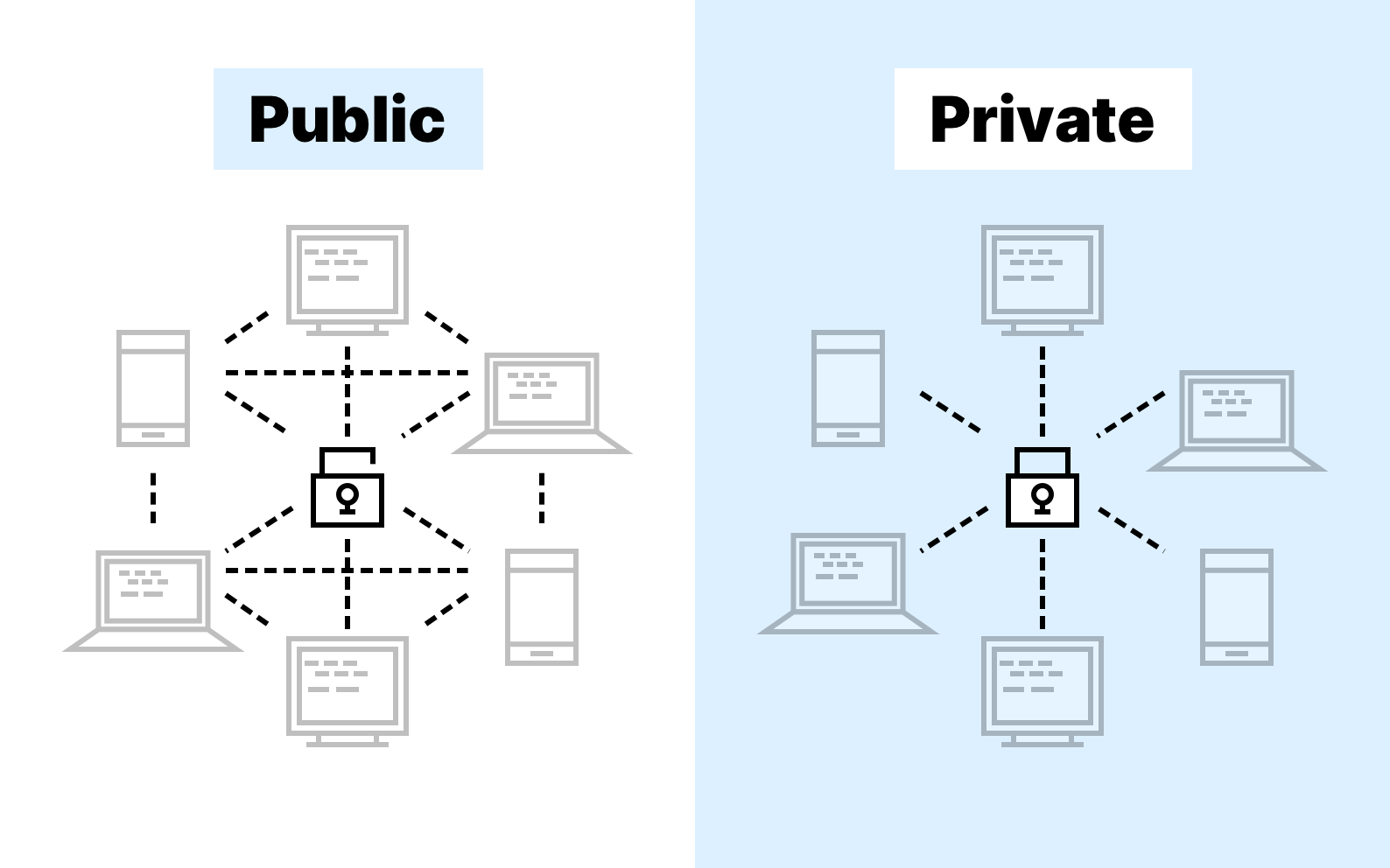
Public blockchains are open networks where anyone can participate without any restrictions. These blockchains are decentralized and allow anyone to read, write, or audit the blockchain’s data. Bitcoin, Ethereum, and other cryptocurrencies are examples of public blockchains. Here are some defining characteristics of public blockchains:
Decentralization and Transparency
Public blockchains are fully decentralized, meaning they do not rely on a central authority. All transactions and data are visible to anyone on the network, ensuring transparency. This openness is a significant advantage for use cases that require trust and verification without intermediaries.
Security and Consensus Mechanisms
Public blockchains typically employ consensus mechanisms such as Proof of Work (PoW) or Proof of Stake (PoS) to secure the network. These mechanisms require participants to solve complex mathematical problems or show ownership of a certain amount of cryptocurrency to validate transactions. This makes the network secure but can also be resource-intensive.
Anonymity and Pseudonymity
While public blockchains offer transparency, they also provide a level of anonymity. Users are identified by their public addresses rather than personal information, which offers a degree of privacy. However, this anonymity can sometimes be exploited for illegal activities.
Open Participation
Anyone with an internet connection can join a public blockchain network, making it highly inclusive. This open participation fosters innovation and collaboration across a global community of developers and users.
What is a Private Blockchain?
Private blockchains, also known as permissioned blockchains, are restricted networks where only authorized participants can access and validate transactions. These blockchains are often used by organizations and enterprises that require more control over the network. Here are some key characteristics of private blockchains:
Controlled Access
In a private blockchain, access is restricted to specific participants who have been granted permission to join the network. This control allows organizations to maintain privacy and limit who can view or interact with the data.
Enhanced Privacy and Confidentiality
Since only authorized participants have access to the network, private blockchains offer enhanced privacy and confidentiality. This is particularly important for industries that handle sensitive information, such as finance and healthcare.
Faster Transactions
With fewer participants and controlled access, private blockchains can achieve faster transaction speeds compared to public blockchains. This efficiency is beneficial for businesses that require quick and reliable transaction processing.
Flexible Consensus Mechanisms
Private blockchains can employ various consensus mechanisms, such as Practical Byzantine Fault Tolerance (PBFT) or Delegated Proof of Stake (DPoS), which are more energy-efficient and better suited for permissioned networks.
Key Differences Between Public and Private Blockchains
Understanding the distinctions between public and private blockchains is crucial for determining which type best suits specific business needs. Here are the primary differences:
Access and Participation
– Public Blockchains: Open to anyone; no restrictions on participation.
– Private Blockchains: Restricted to authorized participants; controlled access.
Decentralization
– Public Blockchains: Fully decentralized with no central authority.
– Private Blockchains: Partially decentralized, often controlled by a single organization or consortium.
Transparency
– Public Blockchains: All data is visible to anyone on the network, ensuring full transparency.
– Private Blockchains: Data is only visible to authorized participants, offering greater privacy.
Security
– Public Blockchains: Secure through consensus mechanisms like PoW or PoS, but can be resource-intensive.
– Private Blockchains: Typically more secure due to restricted access and efficient consensus mechanisms.
Performance
– Public Blockchains: Can be slower due to larger network sizes and resource-intensive consensus.
– Private Blockchains: Faster transaction speeds due to fewer participants and efficient consensus.
Anonymity
– Public Blockchains: Provide anonymity through pseudonymous addresses.
– Private Blockchains: Offer less anonymity due to controlled access and participant verification.
Use Cases for Public Blockchains
Public blockchains are ideal for applications where transparency, decentralization, and open participation are crucial. Some common use cases include:
– Cryptocurrencies: Public blockchains power cryptocurrencies like Bitcoin and Ethereum, enabling peer-to-peer transactions without intermediaries.
– Decentralized Finance (DeFi): Public blockchains facilitate DeFi platforms, allowing users to lend, borrow, and trade assets without traditional banks.
– Supply Chain Transparency: Public blockchains can provide end-to-end visibility in supply chains, ensuring authenticity and reducing fraud.
Use Cases for Private Blockchains
Private blockchains are well-suited for organizations that require privacy, control, and faster transaction speeds. Some common use cases include:
– Enterprise Solutions: Businesses can use private blockchains for internal processes, such as supply chain management, identity verification, and asset tracking.
– Consortium Networks: Industries like banking and healthcare can form consortiums to share data securely while maintaining control over the network.
– Confidential Transactions: Private blockchains allow for confidential transactions and record-keeping, ensuring data privacy in regulated industries.
Challenges and Considerations
Both public and private blockchains come with their own set of challenges and considerations:
Scalability
Public blockchains often face scalability issues due to their size and resource-intensive consensus mechanisms. Private blockchains, while faster, may struggle with scalability if they expand beyond their intended capacity.
Regulatory Compliance
Regulatory compliance is a significant consideration for both types of blockchains. Public blockchains must navigate global regulatory standards, while private blockchains must adhere to industry-specific regulations.
Interoperability
Interoperability between different blockchain networks is a growing concern. As businesses adopt both public and private blockchains, ensuring seamless communication between them becomes essential.
Conclusion
Public and private blockchains each have their own distinct advantages and challenges. Public blockchains offer transparency, decentralization, and open participation, making them suitable for applications that require trust and verification. In contrast, private blockchains provide controlled access, enhanced privacy, and faster transaction speeds, making them ideal for enterprise solutions and industries handling sensitive data.
Ultimately, the choice between public and private blockchains depends on the specific needs and goals of an organization. As blockchain technology continues to evolve, businesses and developers must stay informed about the latest advancements and trends to make informed decisions about which type of blockchain to leverage. Whether opting for a public or private blockchain, the potential to transform industries and drive innovation remains significant.
#ChatGPT assisted in the creation of this article.











Post Comment