Understanding Blockchain Consensus: Key Mechanisms Explained
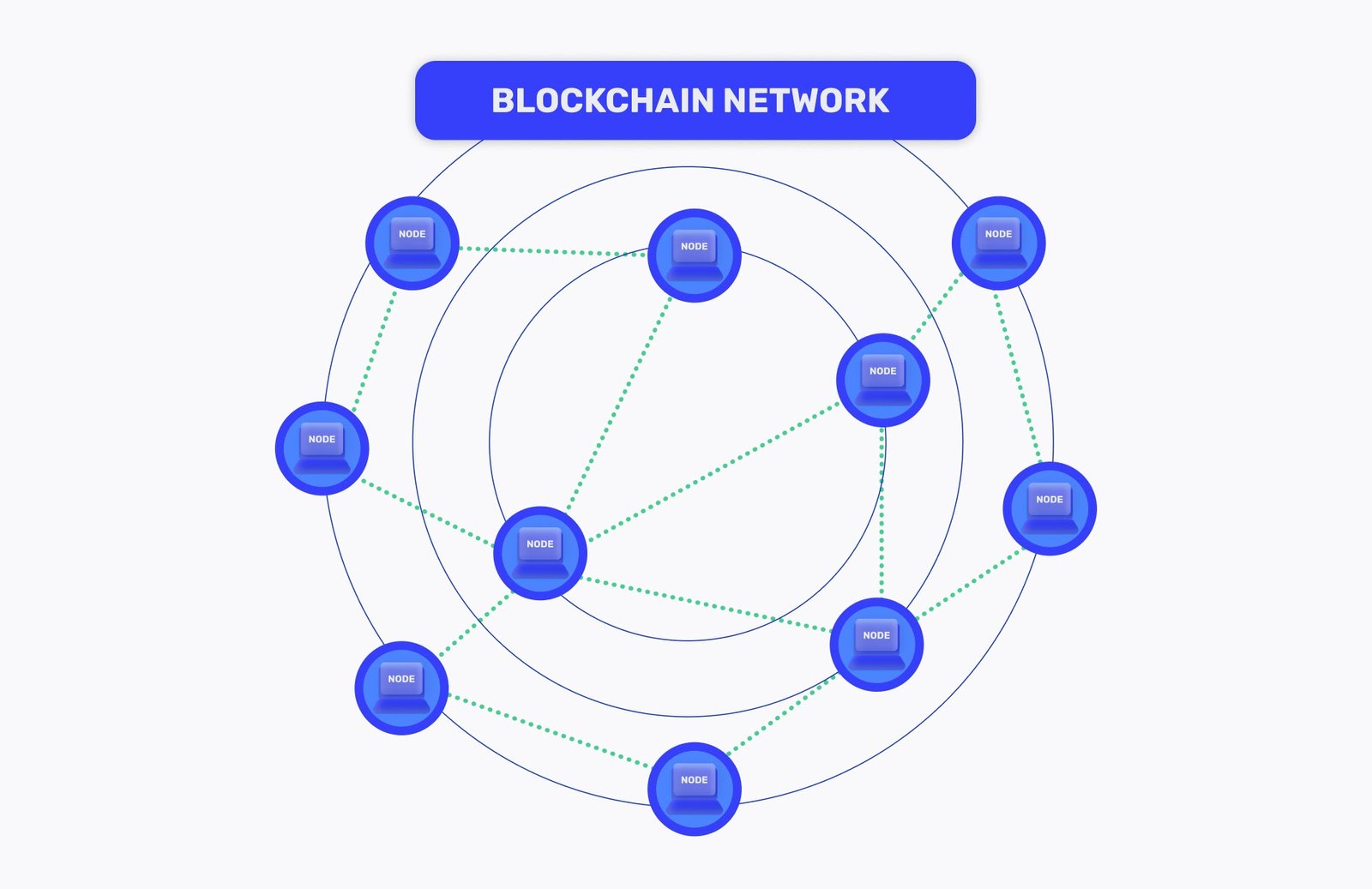
Blockchain technology has rapidly gained traction over the past decade, revolutionizing industries from finance to supply chain management. At the heart of this innovation is the concept of decentralized consensus, a mechanism that allows distributed networks to agree on the state of a blockchain without a central authority. This article delves into the intricacies of blockchain consensus, exploring the key mechanisms that underpin this revolutionary technology.
The Essence of Blockchain Consensus
In traditional systems, a central authority, such as a bank or a government, is responsible for maintaining and verifying records. In contrast, blockchain networks operate on a decentralized model where no single entity has control. This decentralization requires a consensus mechanism to ensure that all participants, or nodes, agree on the state of the blockchain.
Consensus mechanisms are vital for several reasons:
1. **Security**: They protect the network against fraudulent activities and attacks.
2. **Integrity**: They ensure that all copies of the blockchain reflect the same data.
3. **Trust**: They allow participants to trust the system without needing to trust each other.
Key Blockchain Consensus Mechanisms
Various consensus mechanisms have been developed to address the challenges of decentralization. Here are the most prominent ones:
Proof of Work (PoW)
Proof of Work is the consensus mechanism that powers Bitcoin, the first and most well-known cryptocurrency. It requires participants, known as miners, to solve complex mathematical puzzles to validate transactions and add them to the blockchain. The first miner to solve the puzzle gets to add the block and is rewarded with cryptocurrency.
**Advantages**:
– **Security**: PoW is highly secure due to the computational power required to manipulate the blockchain.
– **Proven**: It has been thoroughly tested since Bitcoin’s inception in 2009.
**Disadvantages**:
– **Energy Consumption**: PoW is energy-intensive, leading to concerns about its environmental impact.
– **Scalability**: The process is relatively slow, limiting the number of transactions processed per second.
Proof of Stake (PoS)
Proof of Stake was introduced as an alternative to PoW to address its high energy consumption. In PoS, validators are chosen to create new blocks based on the number of coins they hold and are willing to “stake” as collateral.
**Advantages**:
– **Energy Efficiency**: PoS significantly reduces energy consumption compared to PoW.
– **Incentives**: It provides incentives for participants to act honestly, as malicious behavior could lead to a loss of staked assets.
**Disadvantages**:
– **Centralization**: There is a risk of centralization, as those with more coins have more influence.
– **Complexity**: Implementing PoS can be more complex than PoW.
Delegated Proof of Stake (DPoS)
Delegated Proof of Stake is a variation of PoS where coin holders vote for a small number of delegates to validate transactions and maintain the blockchain. These delegates are responsible for reaching consensus and are rewarded for their efforts.
**Advantages**:
– **Efficiency**: DPoS offers faster transaction times and higher throughput.
– **Democratic**: It introduces an element of democracy, as stakeholders can vote for their preferred delegates.
**Disadvantages**:
– **Centralization Risk**: Concentrating power in the hands of a few delegates can lead to centralization.
– **Voter Apathy**: Stakeholders may not actively participate in voting, leading to a lack of accountability.
Practical Byzantine Fault Tolerance (PBFT)
PBFT is designed for permissioned blockchains where participants are known and trusted. It aims to reach consensus even if some nodes act maliciously or fail to respond. Nodes exchange messages to agree on the order and validity of transactions.
**Advantages**:
– **Fault Tolerance**: PBFT can tolerate faulty or malicious nodes up to a certain threshold.
– **Low Latency**: It offers low transaction finality time compared to PoW and PoS.
**Disadvantages**:
– **Scalability**: PBFT becomes less efficient as the number of nodes increases.
– **Complexity**: The process of message exchange can be complex and resource-intensive.
Proof of Authority (PoA)
Proof of Authority is a consensus mechanism where a few pre-approved nodes, known as validators, are responsible for validating transactions and creating new blocks. It is commonly used in private or consortium blockchains.
**Advantages**:
– **Efficiency**: PoA offers high transaction throughput and low latency.
– **Control**: It provides a level of control, making it suitable for enterprise applications.
**Disadvantages**:
– **Centralization**: PoA can lead to centralization, as a limited number of validators control the network.
– **Trust**: It requires trust in the validators, which may not be suitable for public blockchains.
Proof of Elapsed Time (PoET)
Proof of Elapsed Time is a consensus mechanism developed by Intel that leverages trusted execution environments to ensure fairness. Participants wait for a randomly chosen time before creating a block, and the first one to finish the wait time gets to add the block.
**Advantages**:
– **Fairness**: PoET ensures fairness by using random wait times.
– **Energy Efficiency**: It is energy-efficient compared to PoW.
**Disadvantages**:
– **Hardware Dependency**: PoET relies on specific hardware, which may limit its adoption.
– **Trust**: The mechanism requires trust in the hardware manufacturer.
Choosing the Right Consensus Mechanism
Selecting the appropriate consensus mechanism depends on several factors, including the network’s goals, scalability requirements, and security considerations. Public blockchains often prioritize security and decentralization, making PoW or PoS suitable choices. In contrast, private or consortium blockchains may prioritize efficiency and control, making PoA or PBFT more appropriate.
Ultimately, the choice of consensus mechanism impacts the blockchain’s performance, security, and scalability. As the blockchain ecosystem evolves, new consensus mechanisms continue to emerge, offering innovative solutions to the challenges of decentralization.
Conclusion
Blockchain consensus mechanisms are the backbone of decentralized networks, enabling participants to reach agreement without a central authority. Each mechanism offers unique advantages and trade-offs, reflecting the diverse needs of blockchain applications. By understanding these mechanisms, stakeholders can make informed decisions about which consensus model best aligns with their goals. As blockchain technology continues to evolve, consensus mechanisms will remain a critical area of innovation, shaping the future of decentralized systems.













Post Comment